
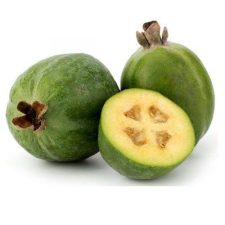
Pineapple Guava / Feijoa
- Edible, sweet-tasting flower petals
- Unique pineapple-mint-guava fruit flavor
- Evergreen with beautiful silvery foliage
- Makes an excellent hedge or specimen shrub
- Very cold-hardy for a tropical fruit
Botanical Name: Acca sellowiana
Format: Fruit shrub/tree
Pineapple Guava (also called Feijoa) is an evergreen fruiting shrub producing aromatic petals and pineapple-like fruit flavor. This unique plant is grown as much for its ornamental value as for its fruit. The leaves are silvery-green on top and fuzzy white underneath. In late spring to early summer, it produces spectacular showy flowers with fleshy, edible petals that taste sweet and spicy – you can pluck and eat them right off the plant. The fruit ripens in fall: a green, oval berry the size of an egg with a texture like a gritty pear and a flavor combining pineapple, mint, and guava. Also useful as an ornamental hedge with silvery foliage.
Taste note (petals): Sweet, spicy, marshmallow-like.
Taste note (fruit): Pineapple, mint, guava, and pear – truly unique.
Key Highlights
| Feature | Details |
| Light | Full Sun to Partial Shade |
| Plant Spacing | 8–10 ft (hedge: 4–5 ft) |
| Plant Height | 8–15 ft (can be pruned to 6–8 ft) |
| Planting Time | Spring or fall |
| Hardiness | USDA Zones 8–11 |
| Propagation | Seedling or grafted |
| Fruit Season | Fall (September–November) |
| Self-fertile | Most varieties require cross-pollination (plant two) |
How to Grow
Feijoa is one of the most cold-hardy “tropical” fruits, tolerating temperatures down to 15°F once established. It thrives in full sun to partial shade and well-drained soil. It is drought tolerant after establishment, but regular watering improves fruit quality. Most varieties are not self-fertile – you need two different cultivars for good fruit set. Prune after harvest to maintain shape and size. Feijoa makes an excellent hedge – plant 4–5 feet apart and prune as needed. It has few pests and is generally disease-free.
Welcome to Your Plant
- Remove Packaging– Unpack carefully.
- Check the Soil– Keep moist.
- Adjustment Period– 2–3 days in shade, then move to sun.
Long-Term Care
- Location: Full sun to partial shade. More sun = more flowers and fruit.
- Soil & Drainage: Well-drained, slightly acidic to neutral. Tolerates poor soil.
- Feeding: Light feeding in spring with balanced fertilizer.
- Watering: Drought tolerant but fruit suffers without water.
- Pruning: Prune after harvest. Can be pruned as hedge or tree form.
- Frost protection: Very cold-hardy once established. No protection needed in zone 8+.
Harvesting & Use
Flowers: Pick petals in late spring. Eat fresh in salads or as a sweet snack.
Fruit: Harvest in fall when fruit drops to the ground (ripe). Or pick when slightly soft. Cut in half and scoop out the jelly-like interior. Use fresh, in smoothies, or make into feijoa chutney or jam.
Delivery Information
Feijoa shrubs shipped in pots. Free shipping over $50.
Support
📧 info@globalflora.org
Where do our plants come from?
Global Flora sources grafted citrus from registered, disease-tested nurseries. All plants are non-GMO.
FAQ – Suitability & Watering
- Zones:8–11. One of the best tropical fruits for cooler climates.
- Pollination:Plant two different varieties for best fruit production.