
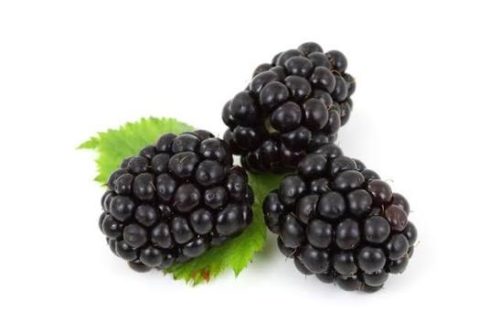
Blackberry
- Thornless varieties available (recommended)
- Very vigorous and productive
- Summer-bearing on second-year canes
- Requires trellis support
- Excellent for jams and preserves
Botanical Name: Rubus fruticosus
Format: Berry cane plant (potted or bare-root)
Blackberry is a vigorous berry cane producing dark, sweet-tart fruit for fresh use, jam, and freezing. Blackberries are closely related to raspberries but are generally more vigorous and easier to grow. This listing is for thornless, semi-erect varieties (e.g., ‘Navaho’ or ‘Black Satin’) – no spines, easier to harvest. The fruit is black, glossy, and sweet with a characteristic tart edge. Canes are biennial (live two years). Offer trellis and pruning guidance for best customer success.
Taste note: Sweet-tart, rich, jammy – excellent for cooking and fresh eating.
Key Highlights
| Feature | Details |
| Light | Full Sun |
| Plant Spacing | 3–4 ft apart; rows 8 ft apart |
| Plant Height | 4–6 ft (trellised) |
| Planting Time | Spring (bare-root) or any season (potted) |
| Hardiness | USDA Zones 5–9 |
| Propagation | Rooted cane |
| Fruit Season | Mid to late summer |
| Self-fertile | Yes |
How to Grow
Blackberries need full sun and well-drained soil. They tolerate a wider range of soils than raspberries. Trellis support is required – train canes on wires (similar to grapes). Erect and semi-erect thornless varieties are easiest for home gardens. Pruning is essential: after harvest, cut the old, fruited canes to the ground. New canes grow that year and will fruit the next summer. In late winter, thin new canes to 4–6 per plant and cut back lateral branches to 12–18 inches. Water consistently during fruiting.
Welcome to Your Plant
- Remove Packaging– Unpack potted or bare-root canes.
- Check the Soil– Keep moist. Bare roots: soak before planting.
- Adjustment Period– Plant immediately.
Long-Term Care
- Location: Full sun. Tolerates partial sun but less sweet fruit.
- Soil & Drainage: Adaptable, but prefers well-drained, pH 6.0–6.8.
- Feeding: Balanced fertilizer in early spring.
- Watering: Consistent moisture during fruit development.
- Pruning: After harvest (cut old canes); late winter (thin and trim laterals).
- Trellis: Required for semi-erect varieties.
Harvesting & Use
Harvest when berries are fully black, plump, and easily pull from the plant. The core stays on the plant (unlike raspberries, where the core comes off). Eat fresh, make into jam, pie, or cobbler, or freeze.
Delivery Information
Blackberry canes shipped potted or bare-root. Free shipping over $50.
Support
📧 info@globalflora.org
Where do our plants come from?
Global Flora sources grafted citrus from registered, disease-tested nurseries. All plants are non-GMO.
FAQ – Suitability & Watering
- Zones:5–9. Thornless varieties are less cold-hardy than thorny.
- Pruning:Do not skip – blackberries will become an unproductive thicket without annual pruning.